

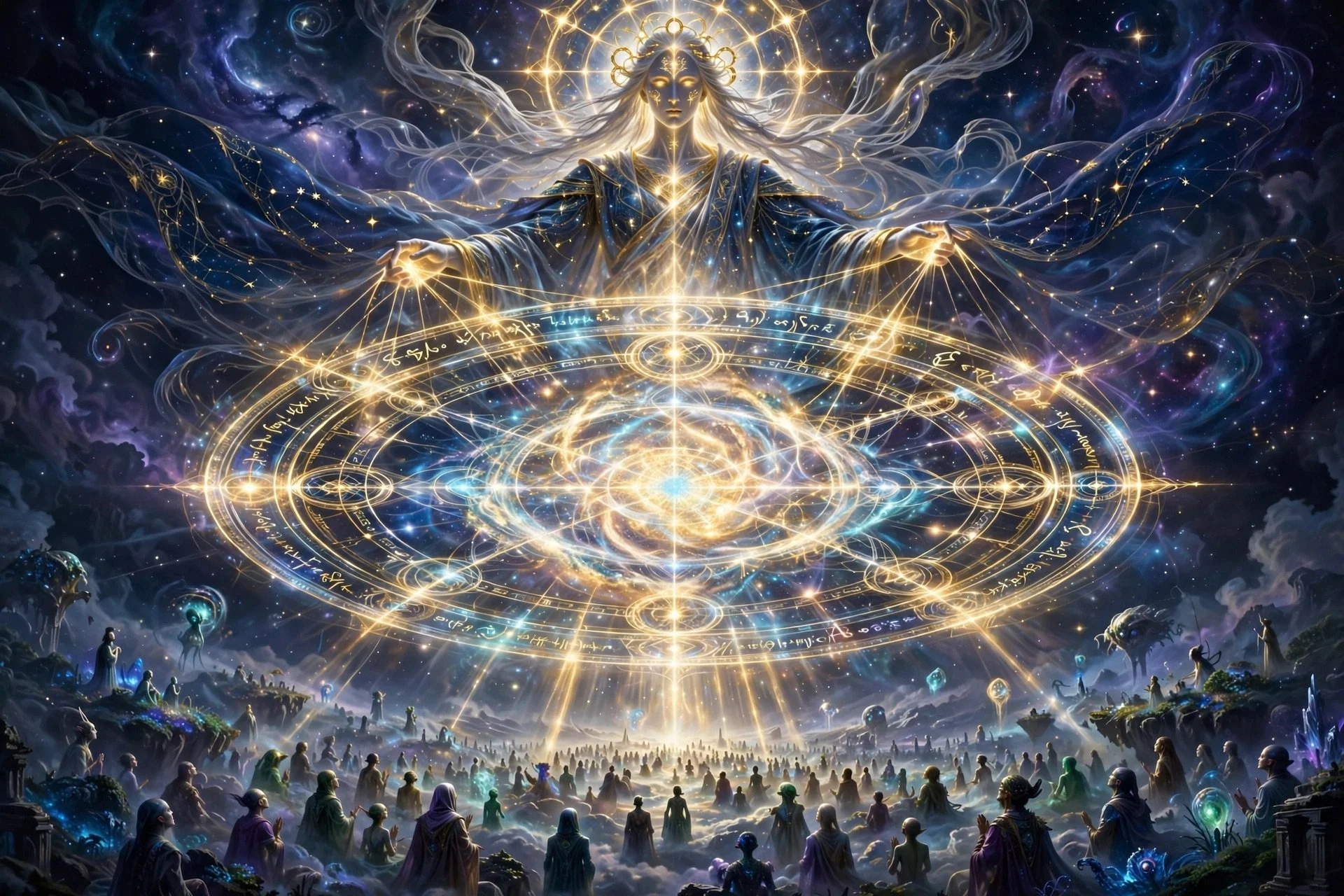
Here is a poem I wrote as an interpretation from the Jaap Sahib of Guru Gobind Singh:
You are the wielder of the umbrella of sovereignty, the wielder of the discus of power
You are the enjoyer of the umbrella of sovereignty, the enjoyer of the discus of power
You are self-existent,
You are beautiful,
You are with all at all times,
You are united with all
You are the destroyer of suffering,
You are the embodiment of compassion
You are always with me,
You are indestructible,
You are glorious.
This is Chattr Chakkr Vartee, the mantra I have chosen for my 40-day sadhana. I did not choose it because it sounds beautiful, though it does. I chose it because it resonates with me and I always feel calm and at ease. It describes exactly what I need to remember. I can manifest fearlessness and courage when I know I am not alone. Look closely at what those first lines are actually saying. Sovereignty or the umbrella and power or the discus are there but they are not power over others. They are the power of a presence that needs nothing outside itself to exist. It is self-existent and beautiful. It is with all, at all times, united with all. That last part matters most to me. This is not a God who visits sometimes and leaves at other times. This is a presence that is always with me, even when I forget, even when I am afraid, even when I feel alone. Indestructible means it cannot be broken by my doubt, my past, or my mistakes. Glorious means it does not dim because I am having a hard day.
And then, in the same breath, my poem says destroyer of suffering, embodiment of compassion. This is power and tenderness together and that is the balance I am learning to live in. I desire to be strong without becoming hard on myself and to be tender without losing myself. In Kundalini teaching, Chattr Chakkr Vartee is a mantra for the heart center. It gives direct energy to the heart. When I am sinking, when fear rises, when I feel small or unsure, chanting it is a way to recuperate myself not by pretending the fear isn't there, but by remembering the larger presence that holds it.
The pure one
And then the poem turns, and asks what a human being looks like when that light is actually lived:
When the complete divine light shines within the heart, that one is known as Khalsa — the pure one.
They meditate on the ever-awakened light, day and night, and do not let the mind bring in anything other than the One.
They adorn themselves with complete love and faith, and do not mistake empty rituals, fasts, or grave-worship for the path.
Pilgrimages, charity, compassion, austerity, discipline — they know none of these except the One. They recognize only the One.
Purity, in this poem, is not about being perfect. It is not about following more rules, or proving yourself worthy. It is about the heart that is not divided like day and night. It is about the ever-awakened light within your heart, and nothing else brought in to replace it. Love and faith are the adornments here, not outer show. A Khalsa is not adorned with status or display, but with complete love and complete faith. That love is not sentimental. It is steady. It stays. And the poem is very clear about what purity is not. It is not empty ritual. It is not fasting for show, or worshipping graves, or going on pilgrimage and thinking the journey itself has saved you. Pilgrimage, charity, compassion, austerity, discipline can all be good, and all of them can also become distractions if we mistake them for the One itself. The pure one knows none of these except the One. That does not mean they stop being kind or disciplined. It means kindness and discipline flow from the One, rather than replacing the One.
How the two parts belong together
Here is the connection between the two parts and why I wanted to write about them together. Chattr Chakkr Vartee tells us the One is sovereign, powerful, self-existent, beautiful, with all, a destroyer of suffering, and an embodiment of compassion. One is always with me, indestructible and glorious. Khalsa tells us what happens when a person stops looking for that One only outside themselves, and lets the complete divine light shine within the heart instead. The first part is the description. The second part is the lived result. When the light shines within, meditation is no longer just something you do for eleven minutes in the morning. It becomes day and night, a remembering that continues while you work, while you cook, while you talk with someone you love, or while you rest. The mind will try to bring in other things like worry, comparison, old stories about being bad or not enough, or fear of what others think. The practice is not to fight the mind with force, but to return, again and again, to the One. That returning is healing, in my experience. Not because it fixes everything at once, but because it changes where you stand. You are no longer standing alone, trying to hold yourself together. You are standing with the One who is already with you, already united with all, already compassionate.
A practice to carry with you
If you want to try this for yourself, you do not need to do anything elaborate. Sit comfortably, breathe naturally, and chant Chattr Chakkr Vartee slowly, either aloud or silently every day. Let the words settle in the heart center, in the chest. You do not need to understand every word at first. The words will eventually come to you with repetition. Just the sound itself carries the meaning of sovereignty, beauty, compassion and presence. Then, through the day, notice when your mind brings in something other than the One. It could be a fear, a judgment, a rush to prove yourself. Do your best to gently return to the One not with criticism, but with love and faith the way the poem describes. That gentle return, repeated, is the path of the pure one. I am still learning this myself. My 40 days with this mantra are a beginning, not an ending. But I already know that when I remember that the One is always with me, indestructible and glorious, I am less afraid. And when I am less afraid, I can love more freely, and I can be more truly myself. That, for me, is what it means for the light to shine within the heart. That is Khalsa.